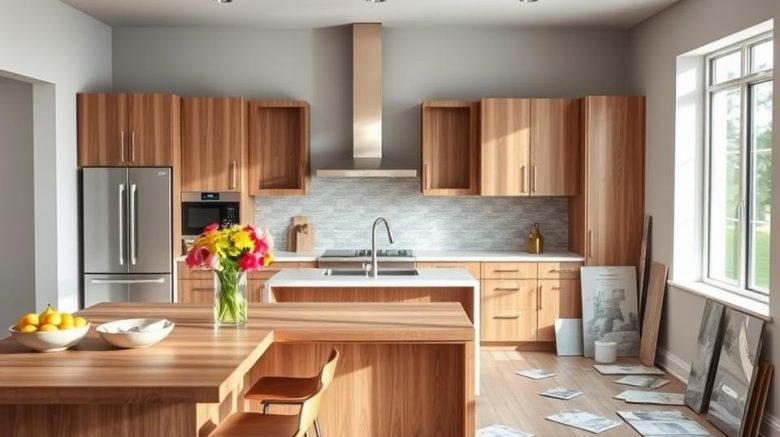
“The details are not the details. They make the design.” — Charles Eames. Kitchen remodels can significantly increase your home’s value and enhance daily functionality. They require a well-thought-out plan and the right team. This guide shares practical kitchen renovation tips to help move your project smoothly from concept to completion.
Discover Bellevue Kitchen Remodeling Experts
Begin by collecting inspiration from various sources like Pinterest, Houzz, and showrooms. Also, observe how your family uses the kitchen. This understanding is key to deciding between a full renovation or a partial update, aligning with your goals.
The overall process typically covers design, permitting, and the construction phase. Design professionals and contractors can create floor plans together with 3D renderings. This allows you to visualize the changes. Keep a kitchen renovation checklist handy so you can monitor decisions, budget items, and timing throughout the remodel.
In this guide, you’ll move through the kitchen remodel process step by step. From early planning and budgeting to picking cabinetry, appliances, and finishing touches, each stage is covered. By following these steps, you can make choices that improve your daily life and protect your investment.
Planning And Budgeting For A Smooth Kitchen Remodel
Start by identifying true necessities versus optional upgrades. Write down your daily-use needs as well as the features that add long-term value. Use that information to set the project scope. Use Pinterest, Houzz, and magazines to inspire your designer and make early decisions.
A straightforward checklist can help organize your choices. Categorize items into appliances, cabinetry, surfaces, lighting, and permits. Mark each one as a must-have, a nice-to-have, or optional. Doing this helps control spending and keeps the remodel moving in the right direction, even when decisions come quickly.
Plan with resale value and long-term function in mind. Allocate 30% for cabinets, 20% for appliances, and meaningful shares for countertops and flooring. Be sure to hold back 10–20% for hidden problems like electrical deficiencies or plumbing repairs. Quality in key areas is worth the investment.
Create a financing strategy before you sign any contract. Look at cash, financing loans, and home equity options side by side. When money is limited, consider prioritizing essential systems now and saving cosmetic upgrades for later. Use your designer for estimates and 3D renderings to compare costs and impacts.
Set a realistic schedule and prioritize decisions that affect lead times. Stock cabinets may arrive in about 3–4 weeks, while custom cabinets often take 5–9 weeks. Larger projects often last 6–8 weeks, while more complex remodels may stretch to 9–12 weeks. Permits and inspections add time in many places.
Timely decisions help prevent schedule slippage. Finalizing materials and hardware early shortens production times. Also account for seasonal limitations, condo building rules, and HOA approvals. Maintain communication with your contractor and use the guide to track progress, selections, and approvals.
Below is a compact budget allocation example and schedule risks to help you plan.
| Budget Category | Typical Allocation | Why It Matters |
|---|---|---|
| Cabinetry | About 30% | Defines storage, function, and long-term aesthetics; lead time affects schedule |
| Kitchen Appliances | ~20% | High upfront cost; choose models that match lifestyle and energy needs |
| Counter Surfaces | About 10–15% | Maintenance needs and durability affect both daily function and future value |
| Floor Surfaces | Roughly 8–12% | Durable flooring choices can lower long-term replacement expenses |
| Mechanical Systems | ~8–12% | Behind-the-wall systems can uncover costly surprises, so inspections matter |
| Installation Labor | Roughly 10–20% | Skilled installation helps prevent callbacks and later repairs |
| Contingency Fund | About 10–20% | Covers surprises like mold, hidden pipes, or code upgrades |
Use the kitchen remodeling guide as your roadmap through these steps. Keep the kitchen renovation checklist handy during meetings and site visits. By working this way, you can reduce surprises and shape a project that suits your spending plan and daily needs.
Kitchen Remodeling Guide
Begin with a detailed plan outlining the journey from the first meeting to the final walkthrough. It helps homeowners understand design options, schedule expectations, and key checkpoints. A strong plan reduces surprises during demolition and helps keep every trade on schedule.
Overview Of The Kitchen Remodel Process
Most projects begin with an initial consultation followed by the design phase. Expect to see floor plans, 3D renderings, and a detailed estimate. Often, the estimate is structured around Good, Better, and Best material options.
After the design is approved, the contract is signed and a project manager is assigned. The project manager becomes the single point of contact for the job. The process then unfolds with demo, plumbing and electrical rough-in, cabinet and countertop installation, flooring, appliance connection, and a final walkthrough.
Homeowners interested in DIY kitchen remodeling may want to handle lighter tasks like painting or hardware installation. Do that only if you have the ability, tools, and available time. For major structural, plumbing, or electrical work, it’s advisable to hire licensed professionals to adhere to local regulations.
What Happens During Construction
Demolition day almost always creates dust, even when containment systems are used. Set up a temporary kitchen and protect adjacent spaces in advance. Tradespeople work in phases, necessitating scheduled inspections at various stages.
Project managers coordinate subcontractors, suppliers, and installers so the schedule does not drift. Companies such as Renovate Builders may use structured communication and scheduling tools to keep homeowners informed at each milestone.
Permits are a critical early consideration. While contractors guide the permit process, homeowners are accountable for ensuring legal compliance. Keep a checklist for quality reviews and maintain open communication so change orders and unexpected issues can be handled quickly.
Optimizing Kitchen Layouts And Flow
Optimizing your kitchen layout can significantly improve daily tasks and enhance entertainment experiences. Start with a detailed plan that reflects your lifestyle and the space you have available. Utilize in-home measurements and 3D renderings to explore different layouts before making a final decision. If you’re considering significant changes, such as moving appliances or removing walls, consult a project manager regarding wiring and plumbing.
Choosing The Best Layout For Your Space
An L-shaped layout offers versatility and good traffic flow, making it a strong fit for family use and informal gatherings. U-shaped layouts, on the other hand, offer an efficient work zone with ample counter space, ideal for larger kitchens. If space is tight, a galley layout can maximize every available inch with two efficient parallel runs.
An island can add meaningful storage, extra prep area, and room for seating. Try to maintain at least 36 inches of clearance around the island for one cook and 42–48 inches for multiple users. Your daily habits should help determine which layout is most practical.
Designing The Work Triangle For Better Workflow
For efficient workflow, the stove, sink, and refrigerator are often best positioned 4–9 feet from one another. Create separate zones for prep, cooking, and cleanup so tools and surfaces stay close to where they are needed.
Ensure there’s sufficient prep space near the stove and sink. In open-concept homes, choose quieter appliances, strong ventilation, and noise-reducing features to keep the space comfortable. These choices reflect the latest trends in kitchen design, focusing on both functionality and social interaction.
Accessibility And Lifestyle Design
Design your kitchen to be flexible, catering to all family members and guests. Consider using lower counters, wider aisles, pull-out storage, and lever hardware to improve usability. If you entertain often, appliance garages and workstation sinks can help keep the kitchen more efficient and organized.
As you plan kitchen upgrades, start with the changes that will most improve how you live. Start with significant alterations and then refine details. Consultations can help make sure the final plan works for both accessibility and entertaining.
Selecting Durable Materials And Finishes
When choosing kitchen materials, think about durability, maintenance requirements, cost, and appearance. These factors significantly impact how your kitchen looks and functions over time. It’s essential to align your choices with your lifestyle to ensure the space remains both beautiful and practical.
Comparing Countertop Options And Tradeoffs
Quartz countertops from brands such as Caesarstone and Cambria are popular in busy homes because they are non-porous and easy to maintain. On the other hand, granite is known for its heat and scratch resistance but requires periodic sealing to prevent stains. Quartzite provides a marble-like look with impressive strength, but it tends to cost more and may also require sealing.
Soapstone, known for its matte finish and natural heat resistance, does not require sealing but will darken with age. When considering aesthetics and upkeep, weigh the initial cost against the long-term maintenance needs. For homeowners seeking durability with minimal maintenance, quartz often comes out ahead.
Backsplash, Flooring, And Cabinet Finish Choices
Tile backsplashes from brands like Daltile and MSI offer a wide range of designs and are easy to clean. Full-height stone slabs can create a seamless and more upscale backsplash appearance. Hardwood flooring brings warmth, though it needs protection in areas exposed to moisture. Porcelain tile is ideal for areas prone to spills and high traffic.
Luxury vinyl plank from companies like Mannington and Shaw provides water resistance plus realistic wood or stone visuals, often at a friendlier price point. Cabinet choices range from cost-saving stock units to semi-custom and fully custom options for more personalized designs. Brands like KraftMaid and Dura Supreme provide a variety of finishes and construction quality to suit different budgets and preferences.
Selecting Materials For Long-Term Use And Lifestyle
Frequent cooks and hosts often benefit from durable surfaces such as quartz counters and tile or luxury vinyl floors because they are easier to maintain day after day. Pairing these materials with ENERGY STAR appliances can improve efficiency and reduce operating costs. If sustainability is a top goal, bamboo or reclaimed wood flooring and cabinets paired with ENERGY STAR appliances can support a greener design.
Modern design trends can be helpful when selecting colors and textures. Still, your final choice should be led by how you live rather than by trends alone. Thoughtful material choices ensure the longevity of beauty, function, and resale value in your kitchen.
Cabinetry, Storage, And Hardware
Carefully planned cabinetry is central to both kitchen function and style. Begin with a list of daily routines and frequently used kitchen items. This helps in designing cabinet ideas and practical storage solutions tailored to your household. Visit showrooms such as KraftMaid and TRU so you can handle samples and test hardware before deciding.
Types Of Cabinets And When To Choose Them
Custom cabinets work well for unusual floorplans and upscale finishes. They are especially useful when you need exact dimensions or integrated built-ins.
If you want a middle ground between cost and customization, semi-custom cabinets are often a strong choice. They are a practical option when you want some personalization without the full cost of custom work.
Stock cabinets are cost-effective and generally faster to install. They are best suited to standard layouts or projects with tight schedules.
Smart Storage And Organizational Features
Pull-out shelves and rollout trays make lower cabinets easier to reach and reduce the need for bending. Dividers inside drawers help separate utensils and tools so they stay organized.
Corner solutions like lazy Susans or blind-corner pullouts maximize space. Appliance garages can hide smaller appliances without making them hard to reach.
Create zones for prep work, cooking, cleanup, and storage. For families, consider adding snack drawers and lower shelves for children. Ideas like these often make everyday workflow smoother.
Kitchen Hardware And Finishing Touches
Durable hinges together with soft-close slides can improve longevity and create a more refined feel. Brands like Top Knobs, Jeffrey Alexander, and Amerock offer cohesive collections that complement faucets and lighting.
Coordinate hardware finishes with appliance accents to create a unified look. Small details like knob size, backplate, and mounting height impact ergonomics and style.
Work with a designer to plan built-ins for spices, trash pullouts, and workstation sinks. When those details are planned early, costly mid-project changes become less likely.
| Cabinet Feature | Primary Benefit | Typical Cost Range |
|---|---|---|
| Custom Cabinets | Precise fit, upscale finishes, strong resale appeal | $15,000 to $50,000+ |
| Semi-Custom Cabinetry | More personalization with moderate lead times and balanced cost | About $8,000–$20,000 |
| Stock Cabinetry | Affordable, quick install, limited styles | $3,000–$8,000 |
| Pull-Out Shelves And Rollouts | Improved access, ideal for pots and pans | $150 to $600 per unit |
| Corner Pullout Systems | Better storage efficiency in corner areas | About $200–$900 |
| Soft-Close Slides & Hinges | Smoother operation and reduced wear over time | $5–$25 per hardware piece |
| Designer Hardware (Top Knobs, Amerock) | Adds polish and ties together other fixture finishes | $6 to $60 per knob/pull |
Lighting, Appliances, And Mechanical Considerations
A kitchen becomes more than just a room when lighting, appliances, and systems are planned carefully. Good lighting and lifestyle-based appliance choices are both essential. Early resolution of mechanical issues is also key. A kitchen renovation checklist can help you track permits, inspections, and trade schedules more effectively.
Layered Lighting For Function And Ambience
Begin with ambient lighting to achieve even illumination. Recessed ceiling fixtures or a central flush mount fixture provide the base light level.
Place task lighting where food preparation and cooking actually happen. Under-cabinet lights, pendants over islands, and a bright fixture above the sink and stove are essential. Accent lighting adds depth and mood by highlighting backsplashes, open shelving, and architectural features.
Implement controls for multiple lighting scenes. Dedicated switches and dimmers let you move from functional prep lighting to a softer dining atmosphere with ease. The result is both on trend and highly practical for everyday life.
How To Choose Appliances That Fit Lifestyle And Design
Appliances should be selected around your real cooking habits. Casual cooks may prefer compact ranges and a reliable refrigerator. Dedicated home chefs often look for double ovens, pro-style ranges, and microwave drawers. For open-concept spaces, quiet dishwashers and lower-vibration refrigerators help control sound transfer.
ENERGY STAR models are worth considering if you want lower energy costs. Over time, these appliances can help reduce utility use and operating costs. Ensure the chosen appliances match your aesthetic and storage needs.
Use the kitchen renovation checklist to compare dimensions, clearances, and venting needs before placing orders. Be sure appliance lead times line up with cabinet delivery dates and countertop templating so the schedule stays coordinated.
Plumbing, HVAC, And Permit Planning
Handle plumbing and HVAC requirements early so ventilation and air quality are addressed properly. Coordinate duct routes with cabinet layouts to optimize hood performance without compromising on aesthetics or functionality.
Plan electrical and gas rough-ins before finish materials are installed. Those rough-ins generally need inspections after demolition and before drywall or tile installation. Using licensed professionals helps ensure code compliance and improves the chances of passing inspection.
Review permit requirements and inspection timing with the contractor early on. Correct permitting is important for both resale value and future mortgage-related requirements. Use the checklist to record permit numbers, insurance details, and inspection dates so critical paperwork is not missed.
How To Hire The Right Contractor And Manage The Project
Choosing the right team is critical for the project’s cost, timeline, and quality. Begin by gathering referrals and reading online reviews. Review completed kitchen portfolios and confirm the contractor’s licensing and insurance coverage. Professional directories such as NARI can offer another layer of reassurance.
How To Find And Vet A Kitchen Contractor
Get at least three proposals that spell out the work scope, timeline, and payment schedule. Use those portfolios to compare workmanship, finish quality, and how contractors handle complex problems. If feasible, speak with references and see recent projects in person. Be cautious of low bids, missing insurance, few references, or vague timelines.
Ask who will be onsite, which subcontractors will be used, how dust control will work during demo, and who handles permits and inspections. You should also request a sample project calendar and ask what communication tools are used for updates.
Why Design-Build Can Help And How Renovate Builders Fits In
Design-build companies simplify coordination because fewer separate parties are involved. Renovate Builders provides one point of contact for design, procurement, and construction. This streamlines scheduling and reduces the homeowner’s time spent on ordering supplies and coordinating trades.
Because procurement and construction are more integrated, design-build firms often move faster and limit surprises. When considering Renovate Builders, confirm their process for warranties, lead times, and contingency planning. Clear accountability for each phase is important if you want the project finished on time.
Contracts, Estimates, And Change Order Planning
Secure a detailed written contract before starting work. It should clearly explain the scope, exclusions, payment schedule, warranty, and project timeline. Anything excluded from the price, such as appliances or plumbing fixtures, should be listed clearly.
Change orders are inevitable. Budget for contingencies and require written change orders detailing cost and schedule impacts. Any scope change should include signed approval and an updated schedule.
Maintain regular communication and document all interactions. The contract should serve as your main reference for settling disagreements and finishing the project properly. Always prioritize a clear scope, realistic timing, and written approval for every project change.
Conclusion
Use this kitchen remodeling guide as a practical roadmap for a more seamless renovation. Start by defining clear goals and collecting inspiration. Use 3D renderings to visualize your choices. Allocate a realistic budget for cabinetry, countertops, and flooring, with a 10–20% contingency for unexpected expenses.
Choose durable, low-maintenance materials that suit the way you live. Good examples include quartz counters, tile backsplashes, and luxury vinyl plank flooring. Make sure the work triangle is efficient, the lighting is layered well, and the appliances fit your everyday needs. Before final acceptance, rely on the kitchen renovation checklist to verify finishes, hardware, plumbing, electrical items, and permit requirements.
When you are ready to move forward, a design-build partner like Renovate Builders may help with project management and material sourcing. Ongoing communication with your project manager remains essential. Store all receipts and warranties, require written change orders, and plan for a temporary kitchen while work is underway.
Before closing out the job, perform a final walkthrough to check countertops, backsplashes, and appliance operation. Verify the electrical fixtures and make sure all inspections have been completed. With the right process and reliable contractors, your kitchen remodel can become a long-lasting space that performs well every day.